
What is a mattress encasement?
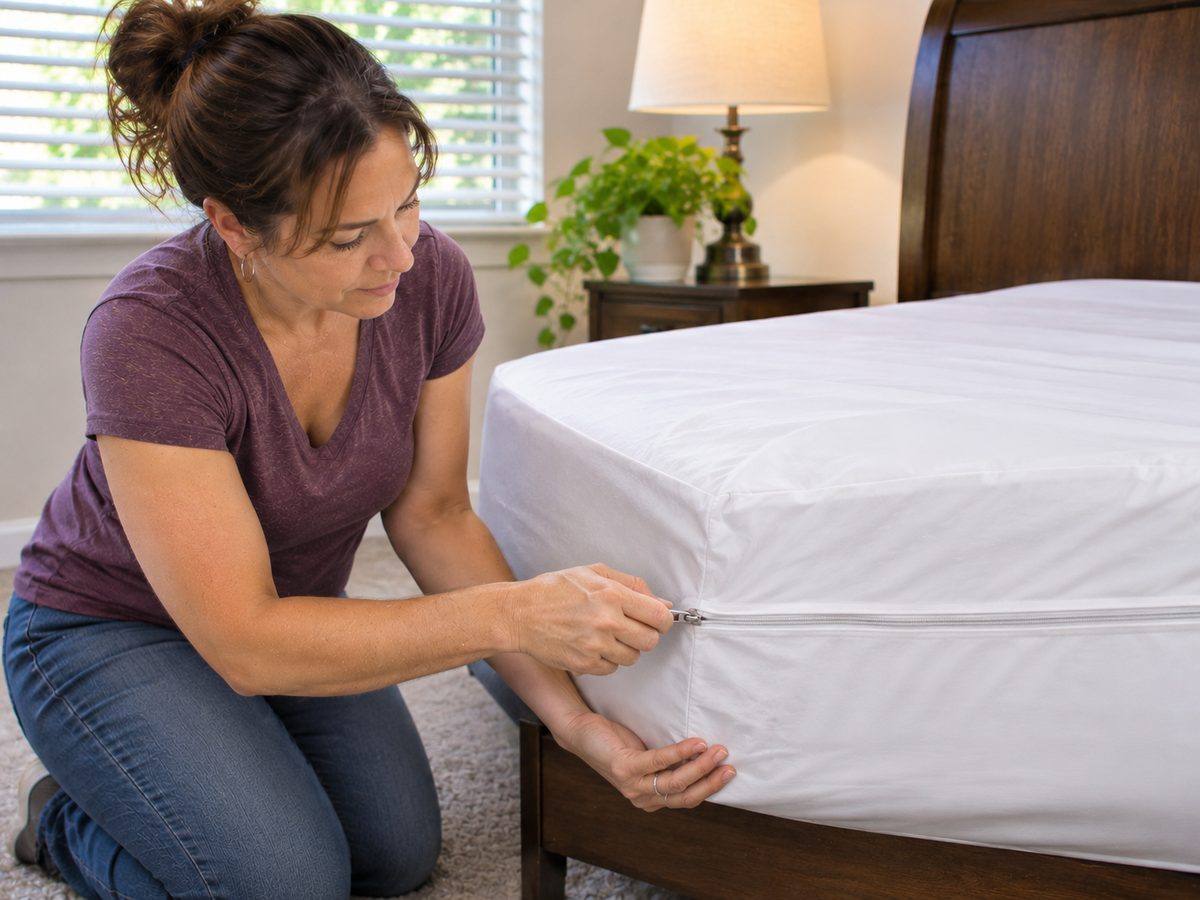
An encasement is a fabric cover that wraps the whole mattress, or the whole box spring, on all six sides and closes with a zipper. That is the key difference from an ordinary mattress pad or a fitted protector. A pad only covers the top. A fitted protector slips over the top and sides like a sheet, and the bottom stays open. An encasement seals the mattress inside a closed bag.
Encasements are sold for several reasons: dust mites, allergies, spills, and bed bugs. They are not all built the same. A cover made to keep out dust or a spilled drink may have a zipper with gaps a small insect can squeeze through, or seams that split after a few months of use. When university and government sources recommend encasements for bed bugs, they mean covers made and tested for that job.
Most bed bug encasements are white or a light color with a smooth face. That is on purpose, and it matters more than it sounds, as you will see below.
What does an encasement actually do for bed bugs?
Extension services and the US EPA describe three jobs an encasement does well. None of them is killing bugs on the spot.
- It traps the bugs already inside. Bed bugs that are hiding in the mattress or box spring when you zip the cover shut cannot get out to feed. Over time they die inside the closed cover. This is why sources stress keeping it on for a long time: bed bugs can live for months without a meal.
- It takes away hiding places. A bare mattress has seams, piping, tufts, handles, a label and a cloth-covered box spring frame full of staples and folds. Those are exactly the tight cracks bed bugs love. A smooth encasement covers all of them, so bugs coming back to the bed have fewer places to settle in.
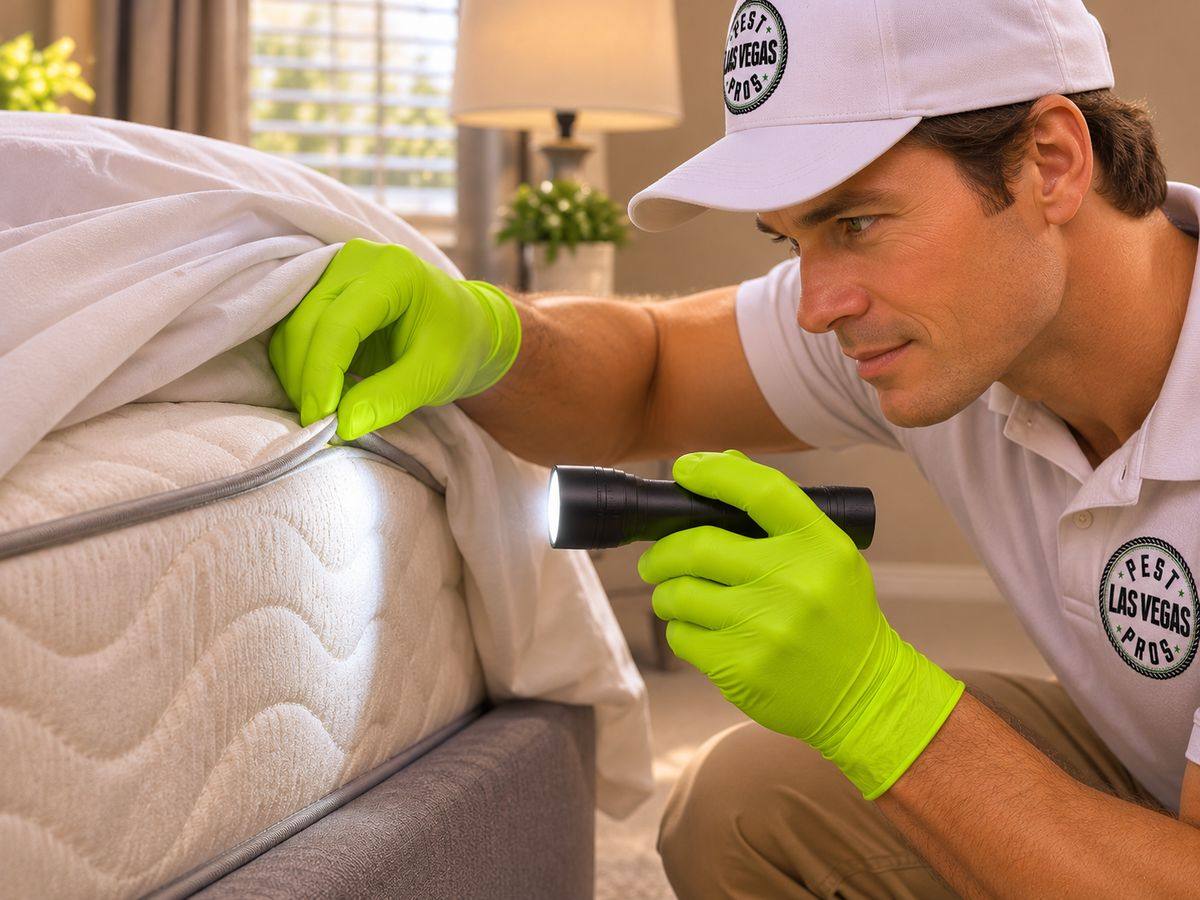
- It makes checking easier. On a plain, light-colored cover, a live bug, a dark fecal spot or a pale shed skin stands out. Instead of turning the mattress over and running a light down every seam, you can look over a smooth surface in a minute or two. This is one of the most useful things an encasement does, both during a treatment program and for years after.
A fourth benefit, less talked about: if you have bed bugs now, an encasement can save a mattress you might otherwise want to throw away. Sources point out that a new mattress brought into a room that still has bed bugs simply gets new bed bugs. Sealing the old one and treating the room is often the better plan.
What makes a good encasement?
Mattress encasements are included with our bed bug program. The sources agree on a short list of what a good one does. We are not naming brands.
- Made and tested for bed bugs. The package should say the cover is designed for bed bugs and has been tested to keep them in and out. A cover sold only for dust or spills is not enough.
- A tight zipper with a closure at the end. The zipper is the weak point. Look for small, close teeth and a flap, cap or lock at the end that holds the zipper pull shut, so there is no gap where the zipper stops. Young bed bugs are tiny and can slip through a small opening.
- Tough fabric and strong seams. The cover has to survive being slept on every night for a year or more. Thin material tears, and a tear is an open door.
- The right size and depth. Measure the mattress depth, including any pillow top. A cover that is too tight strains the zipper and the seams.
- One for the box spring too. This is the step people skip. Box springs have a wood frame, staples and a loose cloth bottom, and they are one of the hardest places in the room to treat. Sources recommend encasing the box spring as well as the mattress. If your bed has a platform base with no box spring, there is nothing to encase there, but the frame itself still needs to be checked.
- A plain, light color. White or light colors make spots and bugs easy to see.
Pillow covers made for bed bugs exist too. Sources give them less weight than the mattress and box spring, because pillows can usually be washed and dried on high heat instead.
How long should I leave it on?
Leave it on. University of Minnesota Extension and others advise keeping encasements on for at least a year, because bed bugs trapped inside can survive a long time without feeding. Many people simply leave them on for good, since the cover keeps working as an early warning long after a problem is over.
A few habits make it work:
- Do not unzip it. Opening the cover to wash it or look inside can let trapped bugs out. Wash your sheets and mattress pad over it instead.
- Check it for damage. Every time you change the sheets, look for rips, holes and a zipper that has slid open. A torn cover no longer traps anything, so replace it.
- Look it over for signs. Run your eyes along the zipper track and the corners, where bugs and spots tend to show up first. If you see new signs, tell us.
- Watch the bed frame. Bed frames with sharp corners, loose screws or rough edges can wear a hole in the cover over time, so check where the cover touches the frame.
Las Vegas is a travel city, and plenty of homes are apartments, condos and attached homes with shared walls. Bed bugs ride in on luggage and used furniture, and in shared buildings they can move between units. Having encasements already on the beds means that if a few bugs do come home with you, the signs show up early on a smooth cover, not months later deep in a seam. For more on that, read bed bugs after travel.
Why is an encasement not a treatment on its own?
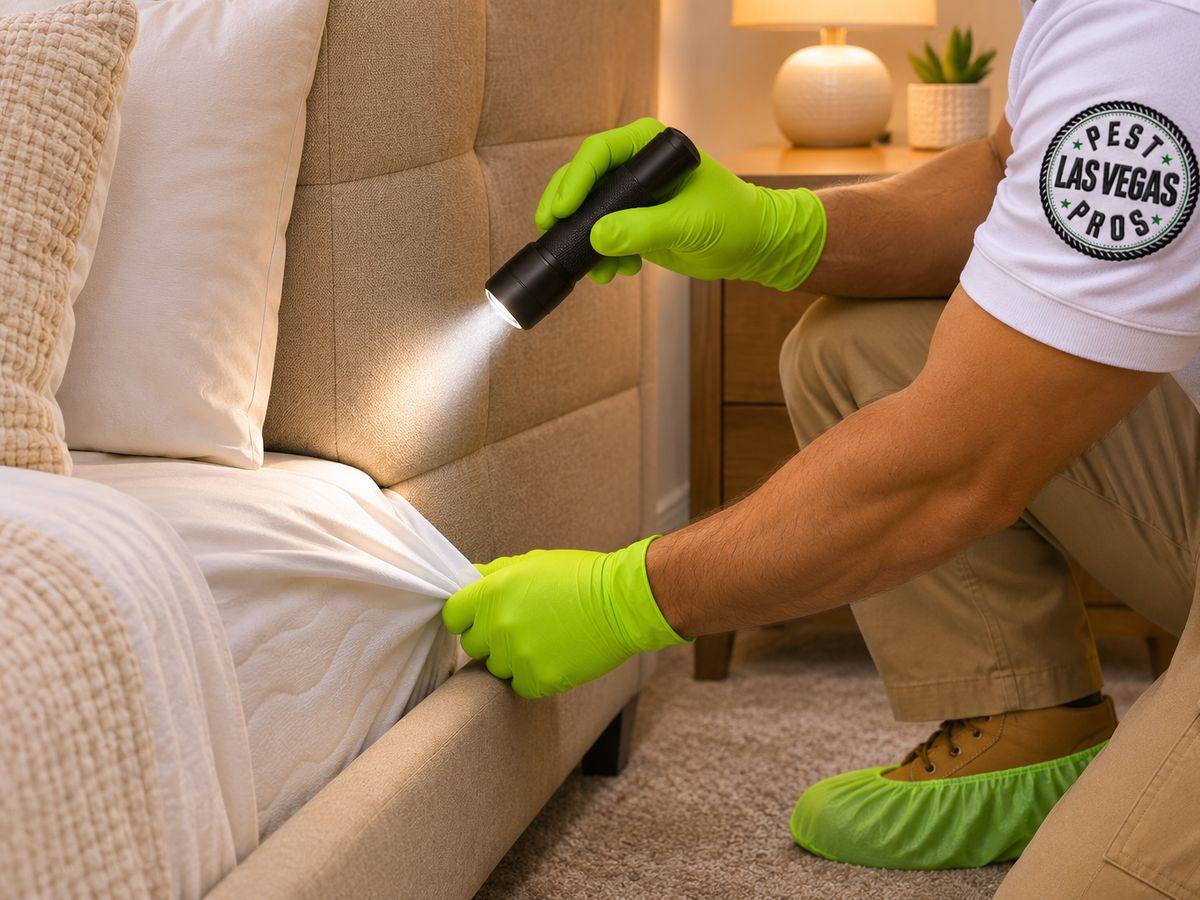
Because bed bugs do not live only in the mattress. They live near where people sleep and rest: the headboard and frame, the joints and screw holes, the nightstand, the baseboards and carpet edges, outlet covers, picture frames, curtains, and the couch where someone naps. An encasement covers two things in the room. It does nothing about the bugs and eggs in everything else.
Picture a room where you zip the mattress and box spring shut and do nothing else. The bugs in the headboard are still there. They come out at night, feed, go back to the headboard, lay eggs, and the group keeps growing. The bed looks clean on the cover while the problem grows a few inches away. Every source we reviewed, from UC IPM to the EPA, treats encasements as one part of a plan that also includes finding and treating the other hiding spots and following up over time.
That is also why a new mattress alone does not fix bed bugs. The bugs were never only in the mattress.
If you are not sure yet whether you have bed bugs at all, start with what counts as proof: live bugs, fecal spots, shed skins or eggs. Bites alone are not proof, and we do not diagnose bites; for any bite or skin concern, see a medical professional. Our post on the signs of bed bugs walks through where to look and what each sign looks like.
How Pest Pros does it
Our line is simple: "Bed bugs require a program, not a quick spray. We inspect the sleeping and resting areas, treat hiding spots, and follow up to break the cycle." Before we treat, we confirm the evidence: live bugs, fecal spots, skins or eggs.
The bed bug program is 3 services over 90 days, and mattress encasements are included. The first service is $100 per room plus $100 per bed, then $50 per month for the follow-ups. Each visit carries a 30-day warranty. Homes over 3,000 square feet get a custom quote. The follow-ups matter because eggs sit protected in seams and cracks and hatch after the first visit; each follow-up catches the next group before it grows up. The full program is explained step by step in the bed bug program explained and on our bed bug program page.
Before the first visit, the office sends you the preparation list, and it covers what to do with mattresses and box springs. You can read it now on the bed bug prep sheet.
Licensed technicians apply every product exactly as its label directs. There is no contract and no cancellation fee. The bed bug program has a stated number of visits; that is the program, not a contract. Every price is on our pricing page, and the pest library entry for bed bugs has more on how to know them.
Common questions
Will an encasement get rid of bed bugs by itself?
Do I need to encase the box spring too?
How long do I keep the encasement on?
Can I just buy a new mattress instead?
Do I have to sign up for monthly service?
Sources: UC IPM Pest Notes: Bed Bugs; US EPA: Bed Bugs; University of Minnesota Extension: Bed bugs; Texas A&M AgriLife, Insects in the City: Bed bugs. Facts are summarized in our own words. Prices, service and warranty come only from Pest Pros.