
Why do trips bring bed bugs home?
Bed bugs do not fly or jump, and they do not come from dirt or from the desert. They walk, and they hide. During the day they tuck into tight seams, folds and cracks close to where people sleep, and at night they come out to feed. A suitcase full of folded clothes, zippers, pockets and piping is exactly the kind of place they like to hide. So the most common way a home gets bed bugs is simple: someone carries them in.
Las Vegas lives on travel. People here fly out for work and family, host guests from out of town, and work in hotels and casinos. Bed bugs turn up in nice hotels and budget ones alike, and in planes, buses, rideshares and dorms. A room being clean or expensive tells you nothing; bed bugs feed on blood, not crumbs. That is not a reason to stop traveling. It is a reason to build a few habits that take five minutes on the way out and five minutes on the way back in.
According to university and government sources, bed bugs can live for weeks to months without a meal, depending on temperature, and the eggs are glued in place and hard to see. That is why one hitchhiker, or one female carrying eggs, can turn into a problem a few weeks after a trip, long after you have forgotten which hotel it was. If you want to know what the evidence looks like, read our guide to the signs of bed bugs first.
How do I check a hotel room for bed bugs?
Do the check before you unpack, while your bags are still closed and in the bathroom or on the luggage rack. Turn on every light and use your phone flashlight. It takes a few minutes:
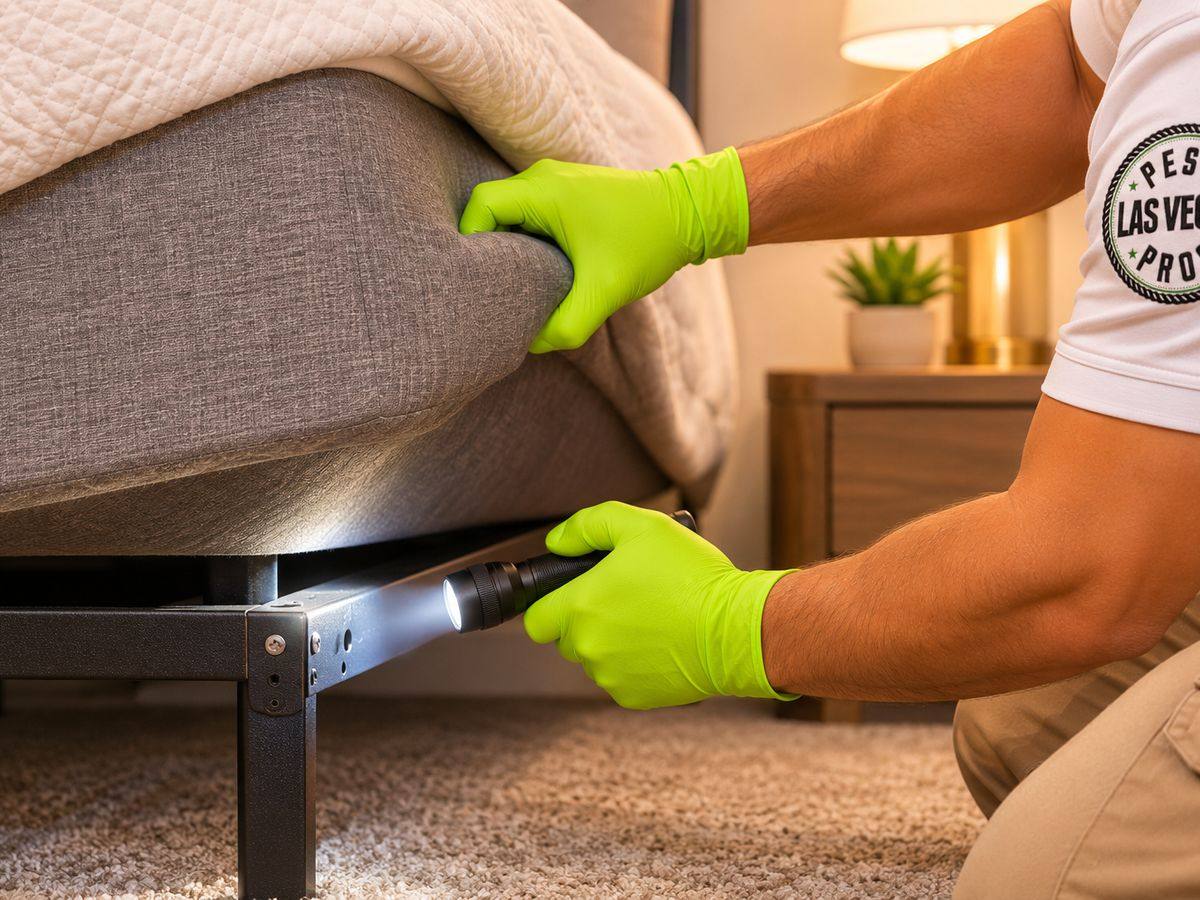
- Pull back the sheets at the head of the bed. Look along the mattress seams, piping and corners, and around any tag. Lift the corner of the mattress if you can and look at the box spring or platform underneath.
- Check the headboard. Look where it meets the bed and the wall. Many hotel headboards are mounted on the wall, and bed bugs often hide right behind them.
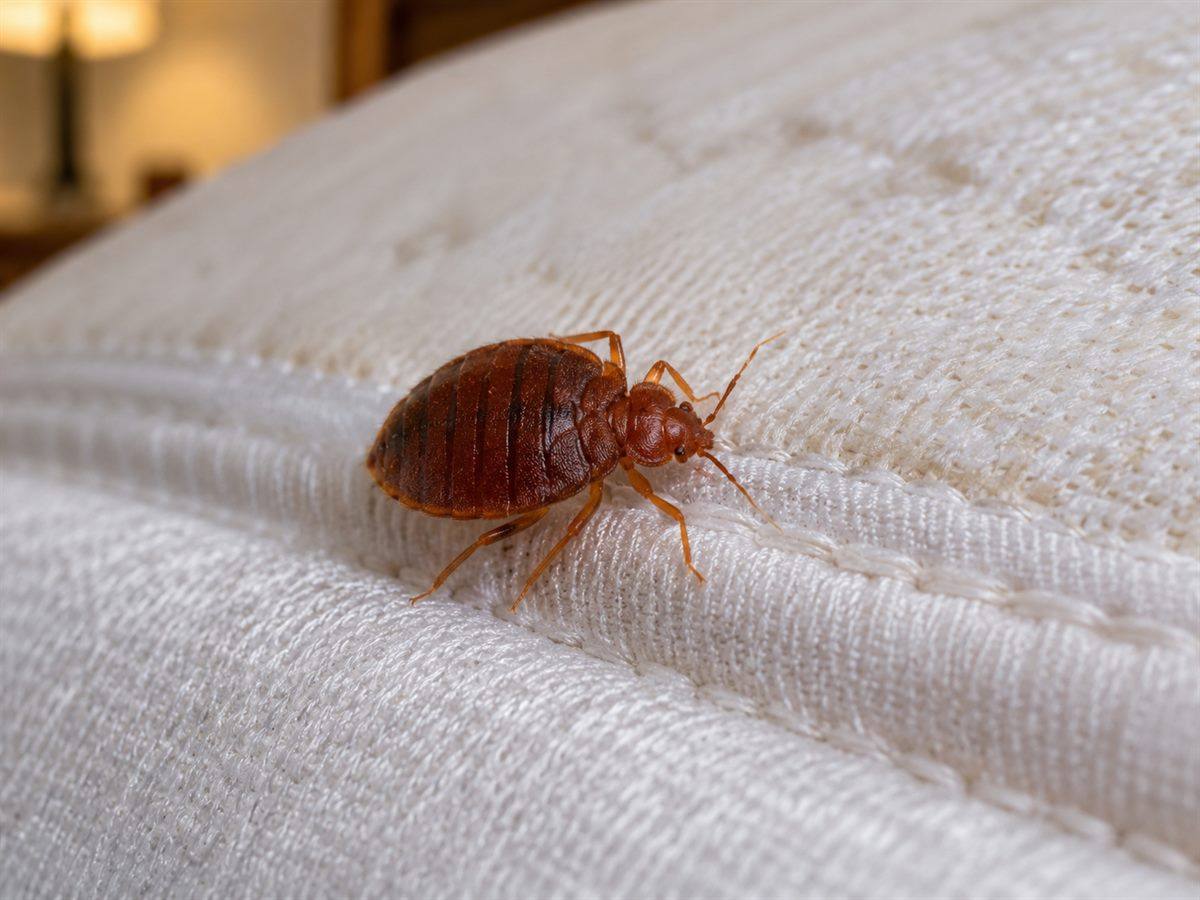
- Look for the signs, not the bugs. Small rust or black spots that look like marker dots, pale shed skins, or a live bug about the size of an apple seed, flat and reddish brown.
- Glance at the nearby furniture. The nightstand, the upholstered chair or couch, and the luggage rack itself, especially its straps and joints.
If you find any of those signs, do not unpack. Ask the front desk for a different room, and ask for one that is not right next to or directly above or below the first one, since bed bugs can move between rooms. Take a photo for your own records. Then repeat the same check in the new room.
Finding nothing is good news, but it is not a promise. Bed bugs hide well, and a light infestation is easy to miss. That is why the next steps still matter.
Where should I keep my luggage while I travel?
Keep your suitcase off the bed and off the floor. The bed is where bed bugs live, and the carpet and upholstered furniture near it are where they wander. The best spots, according to extension and government travel guidance, are:
- The luggage rack, pulled away from the wall and the bed, after you have looked it over.
- The bathroom, on the counter or in the tub, where hard surfaces give bed bugs nowhere to hide. This is a good place to open and repack.
- A hard table or dresser top, away from the bed.
A few more habits help. Keep the suitcase zipped when you are not in it. Live out of it rather than spreading clothes into dresser drawers. Put dirty clothes in a plastic bag inside the suitcase, so they come home sealed and ready for the dryer. Do not toss jackets or backpacks on the bed or the couch. A large plastic bag or a zip-up luggage cover over the suitcase is an easy extra layer.
The same idea applies to guests who stay with you. A guest room with a hard floor and a luggage rack is easier to keep clean than a suitcase opened on a bedspread.
How should I unpack when I get home?
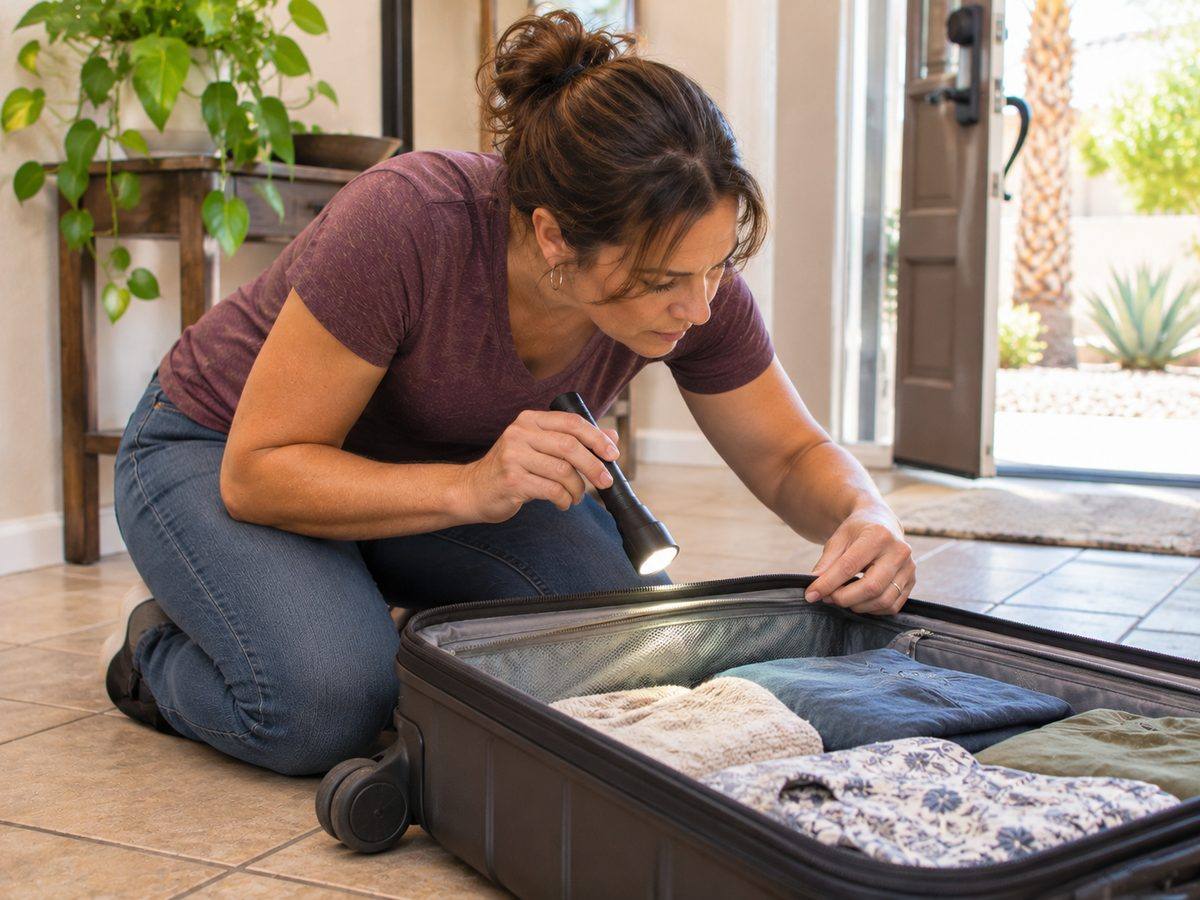
This is the step most people skip, and it is the one that keeps a hitchhiker out of your bedroom. Unpack outside the bedroom, on a hard floor.
- Pick a hard floor near the door. Tile in an entry, a garage floor, a laundry room or a kitchen. Las Vegas homes often have tile at the front door, which is a perfect spot. Avoid carpet, rugs and the bed.
- Take clothes straight to the laundry. Do not stop in the bedroom first. Bag them if the laundry room is not close.
- Look over the empty suitcase. Use a flashlight along the seams, piping, zipper tracks, wheel housings, handle channels and inside pockets. Look for the same spots, skins, eggs or live bugs you checked for in the hotel.
- Vacuum the suitcase. Run a crevice tool along the seams and pockets, then empty the vacuum or throw out the bag outside in a sealed bag.
- Store luggage away from bedrooms. A garage shelf or hall closet is better than under the bed.
Toiletry bags, backpacks, purses and laptop bags traveled too. Give them the same quick look before they go back to their usual spot.
Does washing and drying kill bed bugs?
Heat is what does the work. According to the US EPA and university extension sources, bed bugs and their eggs die when they are held at high temperature long enough, and a clothes dryer on high heat for at least 30 minutes is the simple way to do that at home. Washing on its own is less reliable; the dryer is the important part.
- Everything washable from the trip goes in the dryer, clean clothes included, on the highest heat the fabric label allows. Clean, dry items can go straight into the dryer without washing first.
- Dirty clothes: wash as usual, then dry on high heat.
- Do not overload the dryer. Clothes need room to tumble so the heat reaches every fold.
- Things that cannot go in the dryer, like some shoes or delicate items, can stay sealed in a plastic bag until you have looked them over closely.
- Empty the bag you carried the laundry in, and throw it out or put it in the dryer too.
This matches what our bed bug prep sheet asks before a treatment: clothing and bedding bagged for a hot wash and a hot dry cycle. It is the same habit, used before a problem instead of after one.
If you think something came home with you anyway, the next section is what to do.
What should I do if I find a bed bug after a trip?
Stay calm. One bug found early is the best case, because it is far easier to deal with now than in two months.
- Save it or photograph it. Press it onto clear tape or seal it in a small bag. A close photo with a coin for size helps us confirm what it is.
- Leave the suitcase where it is, on the hard floor, or seal it in a large plastic bag.
- Run the trip clothes through the hot dryer if you have not already.
- Keep sleeping in your own bed. Moving to the couch or a guest room can spread bed bugs to a new room.
- Check the bedroom. Mattress seams, box spring, headboard and nearby furniture, as described in our signs of bed bugs guide.
- Call or text us with the photo and tell us where you found it and when you got home.
About bites: bites alone are not proof of bed bugs, and some people do not react to bed bug bites at all. We do not diagnose bites, and this page is not medical advice. For a bite, a rash or any skin or health concern, see a medical professional. What we look for is physical evidence: live bugs, fecal spots, skins or eggs.
How Pest Pros does it
Our line is simple: "Bed bugs require a program, not a quick spray. We inspect the sleeping and resting areas, treat hiding spots, and follow up to break the cycle." Before we treat, we confirm the evidence: live bugs, fecal spots, skins or eggs.
If a trip did bring bed bugs home, the bed bug program is 3 services over 90 days. The first service is $100 per room plus $100 per bed, then $50 per month for the follow-ups. Each visit carries a 30-day warranty. Homes over 3,000 square feet get a custom quote. The follow-ups are there because eggs sit protected in seams and hatch after the first visit; each follow-up catches the next group. Read the details on our bed bug program page and in the bed bug program explained.
Before the first visit, the office sends you the preparation list, and you can read it now on the bed bug prep sheet. If you are thinking about mattress and box spring covers, read our post on bed bug encasements.
There is no contract and no cancellation fee. The bed bug program has a stated number of visits; that is the program, not a contract. Licensed technicians apply every product exactly as its label directs. Every price is on our pricing page, and the pest library entry for bed bugs has more on how to know them.
Common questions
Can bed bugs live in a suitcase?
Is it enough to just wash my clothes after a trip?
I checked the hotel and found nothing. Am I in the clear?
I woke up with bites after a trip. Do I have bed bugs?
Do I have to sign up for monthly service?
Sources: UC IPM Pest Notes: Bed Bugs; US EPA: Bed Bugs; University of Minnesota Extension: Bed Bugs. Facts are summarized in our own words. Prices, service and warranty come only from Pest Pros.