
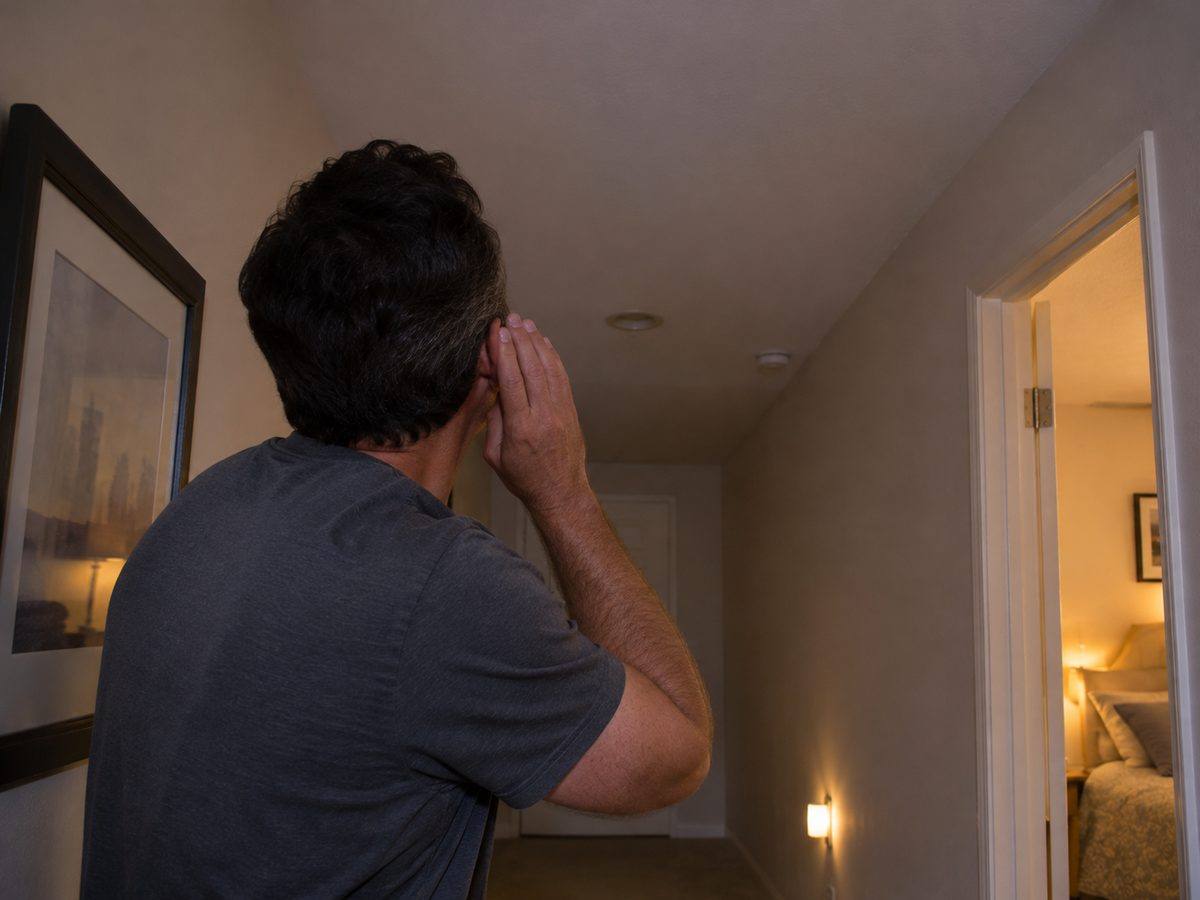
When do you hear it? The clock is the best clue
Most people who call us about ceiling noise describe the same thing: they are in bed or watching TV, the house goes quiet, and something starts moving overhead. Before anyone climbs a ladder, the time of day narrows the list a lot.
- Shortly after dark and again before dawn: this is the classic roof rat pattern. Rats are active at night, and university extension sources note that roof rats are busiest in the first hours after sunset, when they leave the nest to feed. You may hear running, scurrying, scratching, or a steady gnawing that stops and starts.
- All through the night, lighter and quicker: house mice are also night animals. They are smaller, so the sound is softer, more of a patter or a light scratch, and it tends to come from inside walls, behind cabinets and around the kitchen rather than straight overhead.
- At first light and during the day: birds. Pigeons, sparrows and other birds roost at night and get busy at sunrise. Cooing, flapping, hopping and scratching on or just under the roof in the morning points to birds, not rodents.
- A pop, tick or crack right as the sun goes down: in the desert, roofs, ducts and framing cool quickly after a hot day, and the materials can tick and pop as they shrink. That sound is sharp and random. It does not travel across the ceiling the way an animal does.
A simple test: for two or three nights, write down the time you hear it and the room you are in. Text us that list. Times bunched around dusk and late night, moving across the ceiling, usually mean rodents.
Where in the house? High, low, or on the roof
Where the sound sits is the second clue.
- Straight overhead, crossing rooms: something is moving in the attic. In Las Vegas that is usually a roof rat. Roof rats climb, and they like to nest up high: attics, palm skirts, thick vines and hedges. The Texas A&M AgriLife urban pest team lists attic and ceiling noise at night as one of the main signs of roof rats.
- Inside a wall, low, or near the kitchen: more likely mice. Mice nest close to food, in wall voids, behind appliances and in cabinets, and they rarely travel far from it.
- Above the garage: either one. Garages are the most common place in Las Vegas homes to find droppings, and stored boxes, pet food and bird seed draw rodents in.
- On top of the roof, or under the solar panels: birds, especially pigeons. Pigeons roost in the deepest shade they can find, and the space under solar panels is a favorite. That is a different problem with a different fix, covered on our pigeon page.
Near the desert edge, pack rats are worth a thought too. They build nests from sticks and debris and are better known for getting into vehicles parked outside than into attics. Our article on pack rats and your car covers them.
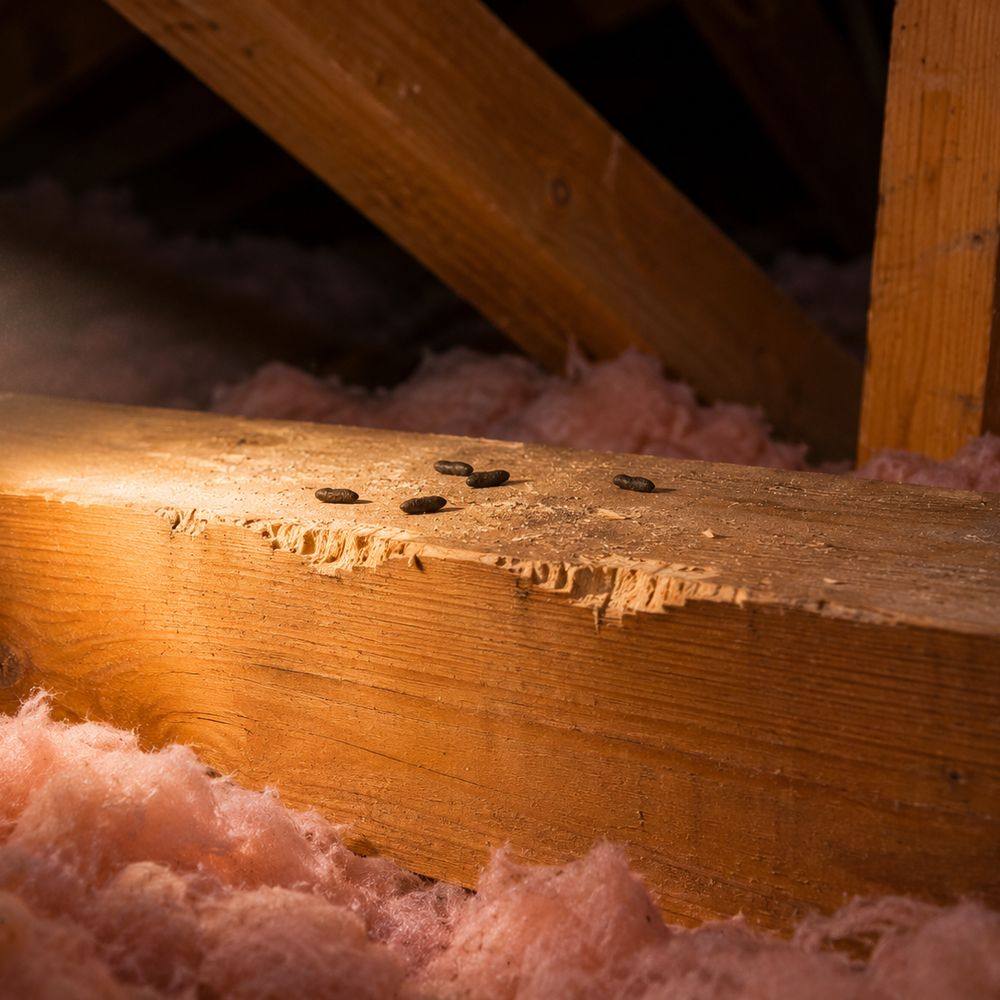
How do they get up there? Las Vegas tile roofs and eaves
Roof rats do not need a big hole. A mouse fits through a gap the size of a dime, and a young rat needs not much more. Las Vegas roofs offer plenty of openings that size.
- The open ends of tile at the eaves: most valley homes have concrete or clay tile roofs. The curved tiles leave gaps along the bottom edge of the roof. If the closure pieces at the eave are missing, broken or were never installed, those gaps lead straight under the tile and, from there, into the attic.
- Where the roof meets the wall: a second-story wall, a patio cover tied into the house, or a garage roof below a higher roof all leave seams and corners where rats can slip in.
- Vents and screens: gable vents, roof vents and dryer vents with torn or missing screens.
- The highways that reach the roof: palm trees with a full skirt of dead fronds, citrus and other fruit trees touching the roofline, thick vines on the walls, utility lines, and the tops of block walls. Roof rats run block walls between yards like sidewalks, then climb to the roof.
The reason they come: food, water and shelter. Fallen fruit, dog food left outside, bird seed and dripping irrigation feed them, and a warm attic shelters them. Autumn is when a lot of homes first hear it, because rodents look for shelter as the nights cool off. Our article on roof rats and fruit trees goes further into the yard side of it.
What can you check from the ground?
You do not need to get on the roof to learn a lot. Please do not. A walk around the house in daylight, and a flashlight at night, is enough.
- Look up at the eaves: missing tile closures, gaps where the roof meets a wall, torn vent screens, and dark greasy rub marks around an opening, which rats leave where they squeeze through.
- Look at what touches the house: palms with skirts, fruit trees, vines and branches that reach the roof or a wall.
- Look at the ground under the trees: hollowed-out oranges still hanging, or half-eaten fruit on the ground, are a strong roof rat sign.
- Watch at dusk: sit outside quietly for 20 minutes after sunset with a flashlight. Rats running the top of the block wall or along a power line are common to see.
- Check the garage: droppings along the walls, behind boxes and near pet food. Our droppings guide shows how to tell mouse from roof rat.
- Peek, do not crawl: if you have an attic hatch, a look with a flashlight from the ladder can show droppings on the joists or trails through the insulation. Do not walk around up there; the ceiling below will not hold your weight between joists.
Take photos of what you find and text them to us. A picture of an eave gap or a dropping next to a coin tells us a lot before we drive out.

Should you worry, or wait and see?
Noise in the ceiling rarely fixes itself. A few nights of scratching usually means rodents have found shelter they like, and rats and mice breed fast when food and shelter are close. Extension sources describe roof rats gnawing wiring, wood and insulation, and rodents of every kind can spread disease through their droppings and urine. For any health concern, see a medical professional.
Two things not to do. First, do not seal them in. The first thing most people want to do is patch every hole. Never close up a home while rodents are still active. A rodent sealed inside cannot get out for water. Trapped and thirsty, it chews through water pipes and electrical lines, and the damage can run to tens of thousands of dollars. Rodents that die inside also bring smell, flies and maggots. Close up only after the population is confirmed gone, and use a handyman for it.
Second, do not leave food out for them. Pick up fallen fruit, bring pet food in at night and keep bird seed in a sealed bin. That will not end the problem by itself, but it makes the bait more attractive than anything else in the yard.
How Pest Pros does it
Roof rats climb. We inspect the roofline and yard attractants, and we look at where you hear the noise and where you found droppings. Then the work is baiting, not trapping and not sealing. The first visit is $200: we inspect the property and install 3 bait stations. We come back every 30 days for $50 to check, refill and move the stations. The program is 3 visits, $300 in all, and it is finished after the third visit. Extra stations are $50 each.
Rodent bait is always inside locked, tamper-resistant stations. We place them along the routes rodents travel: against walls and block walls, near the trees and vines that reach the roof, and near the places where you hear them and find signs. Licensed technicians apply every product exactly as its label directs.
Rodents usually take about the first 7 days to find the stations. Over the next 1 to 2 weeks they feed and the population drops, and the nights get quieter. At each visit your technician checks how much bait was eaten, refills the stations and moves them toward the activity. Each home's station layout is recorded on the account, so whoever comes out knows exactly where every station is. The full step-by-step is on our rodent baiting Answers page.
When the scratching has stopped and the stations show the population is gone, that is the time to close up the roofline. Pest Pros does not seal, patch or repair homes. We will show you the openings worth closing, and a handyman does the work.
After the third visit you choose: stop, keep going at $50 a month, or move to ongoing pest and rodent control together every 60 days, with an ongoing warranty. There is no contract and no cancellation fee. Every price is on our pricing page, and the program itself is on our rodent control page.
Common questions
Is it a rat or a mouse in my ceiling?
The noise is in the morning. Is that rodents?
Will the noise stop on its own?
Should I close up the holes I can see?
Do I have to sign up for monthly service?
Sources: UC IPM Pest Notes: Rats · UC IPM Pest Notes: House Mouse · UC IPM Pest Notes: Pigeons · Texas A&M AgriLife: Rodents in attics. Facts are summarized in our own words. Prices, service and warranty come only from Pest Pros.