
Is it an earwig? What you are looking at
Earwigs are easy to recognize once you know the one feature that gives them away: a pair of curved pincers at the tail end. Everything else about them is fairly plain.
- Size and color: adults are about 3/4 inch long, slim and flat, reddish brown with lighter legs.
- The pincers: the forceps at the back are called cerci. On males they are strongly curved, like a pair of calipers; on females they are straighter and closer together.
- Wings: they have short wing covers near the head, and most of the body is bare segments. They rarely fly, so they reach your home on foot.
- Habits: they come out at night and spend the day packed into tight, dark, damp spaces. Lift a pot, a stepping stone or a soaked doormat, and you may find a dozen at once.
The usual look-alikes are rove beetles, which have a similar long shape but no pincers, and silverfish, which are silver-gray, carrot-shaped and have three bristles at the tail instead of pincers. If you are not sure, text us a clear photo.

Why do earwigs show up after watering?
In most of the valley, the ground around a home is bone dry for most of the day. Earwigs cannot live like that. They need moisture and shelter, so they gather wherever water collects, and in a Las Vegas yard nearly all of that water comes from us.
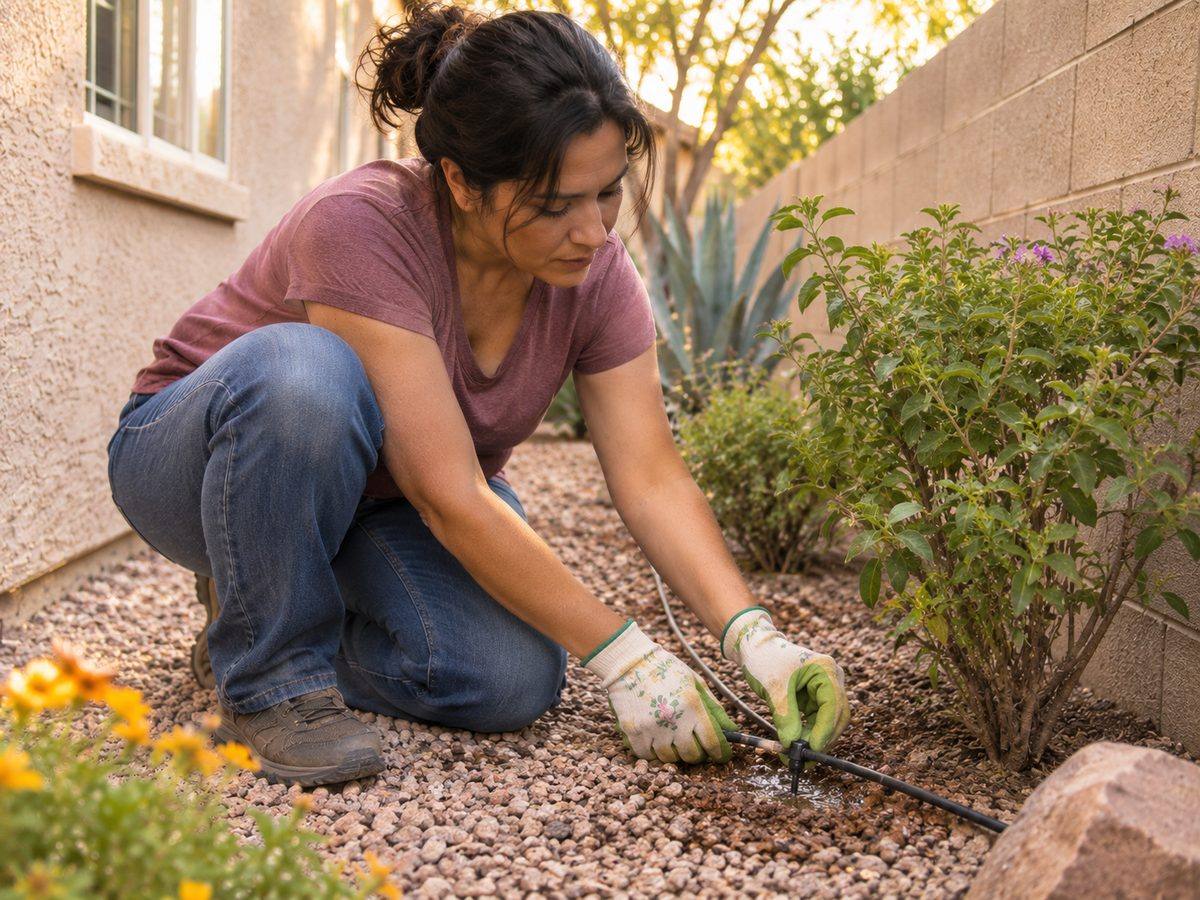
- Drip irrigation: each emitter keeps a small patch of soil wet under the rock. A leaky or broken emitter, or one left running too long, keeps a much bigger patch wet, and that patch becomes a home base.
- Wet mulch and bark: wood mulch holds water and breaks down, giving earwigs food and cover in one place. Mulch piled up against the stucco brings that habitat right to the wall.
- Potted plants: the space under a pot and inside the drainage hole stays cool and damp, and pots are often grouped right by the patio door.
- Turf and planters: lawns and raised beds that get watered every day stay wet at the edges, especially where they meet a sidewalk, a block wall or the foundation.
- Hose bibs, AC drip lines and valve boxes: any slow leak near the house does the same job.
When the water runs, the soil surface stays damp into the evening, earwigs come out to feed, and many of them head for the closest cover. If that damp strip sits right next to the foundation, the closest cover is your house. That is why so many people notice them on the patio, in the garage or on the kitchen floor the morning after the sprinklers run.
Why do earwigs wander inside?
Earwigs do not come indoors to set up a colony. They come in by accident, while searching at night for a cool, damp place to hide, and the gap under a door looks just like the gap under a rock. In Las Vegas, summer heat pushes many pests toward cool, damp places, and that often means indoors.
The places they turn up tell the story: along the bottom of sliding glass doors, under the door from the garage, in the laundry room, under bathroom and kitchen sinks, and around potted plants that were brought inside. They also hitch a ride in on firewood, cut flowers, garden produce and bags of mulch or soil.
The good news is that a home is a poor place for them. Inside, the air is too dry and there is little to eat, so most earwigs that wander in do not survive long unless they find a damp spot. If you keep finding live ones indoors day after day, it means a steady supply is coming from damp landscaping right outside, and that source is where the fix belongs.
Do earwigs really crawl into ears?
No. The name comes from an old myth that earwigs crawl into the ears of sleeping people. There is no evidence that they seek out ears or lay eggs in people. They are looking for dark, damp crevices outdoors, not people.
The pincers are mostly for show and for their own use: earwigs raise them to defend themselves, and use them in mating and to hold food. If you pick one up, it may pinch. A pinch from a large one can be felt, but it usually does not break the skin. Earwigs do not sting, carry venom or spread disease. If you have any concern about a pinch or a skin reaction, check with a medical professional.
Do earwigs damage plants?
They can, and that surprises a lot of gardeners. Earwigs eat a mixed diet. They feed on decaying plant material and on small insects such as aphids, which makes them partly helpful. But when there are many of them, they also chew on living plants.
- Seedlings and young leaves: irregular holes and ragged leaf edges, often overnight. Young vegetable and flower seedlings can be eaten down.
- Flowers: petals with holes, especially soft flowers like marigolds, zinnias and roses.
- Soft fruit and greens: strawberries, ripe stone fruit and leafy greens such as lettuce.
Earwig damage can look like snail or slug damage or caterpillar feeding. The quickest way to tell is to go out with a flashlight an hour or two after dark. If you see earwigs on the plants, you have your answer. No slime trails and no caterpillar droppings are other clues.
What can homeowners do about earwigs?
Earwigs follow water, so the most useful changes are about water and cover close to the house. None of these steps costs much, and together they shrink the habitat right where it causes trouble.
- Water in the morning, not the evening. Watering early lets the surface dry out during the day. Watering in the evening keeps the soil wet right when earwigs come out to feed. Water only as much as the plants need.
- Fix leaky emitters and lines. Walk the drip system while it runs. Look for emitters that bubble, spray or pool water, broken lines and soaked spots that never dry. Also check hose bibs, AC drip lines and valve boxes near the house.
- Pull mulch and bark back from the wall. Keep a dry strip of a foot or so between wood mulch and the foundation. Rock holds much less moisture than bark next to the house.
- Lift and move pots. Set pots on feet or stands so air can move under them, and move the wettest ones away from doors.
- Clear hiding spots. Boards, stacked pavers, leaf piles, wet doormats and stored items along the wall all give earwigs cover. Trim plants that touch the house.
- Close the gaps. Door sweeps on exterior doors, weather-stripping, caulk at cracks and torn screens repaired keep the night wanderers out.
- Trap them in the garden. A rolled-up damp newspaper or a short piece of hose left in a bed overnight collects earwigs. Shake them into soapy water in the morning. A shallow can with a little vegetable oil in it, set level with the soil, works the same way.
For earwigs that are already inside, a vacuum is the simplest tool. Because indoor earwigs are lost outdoor earwigs, spraying the room where you saw one does very little on its own. The population is outside.
How Pest Pros does it
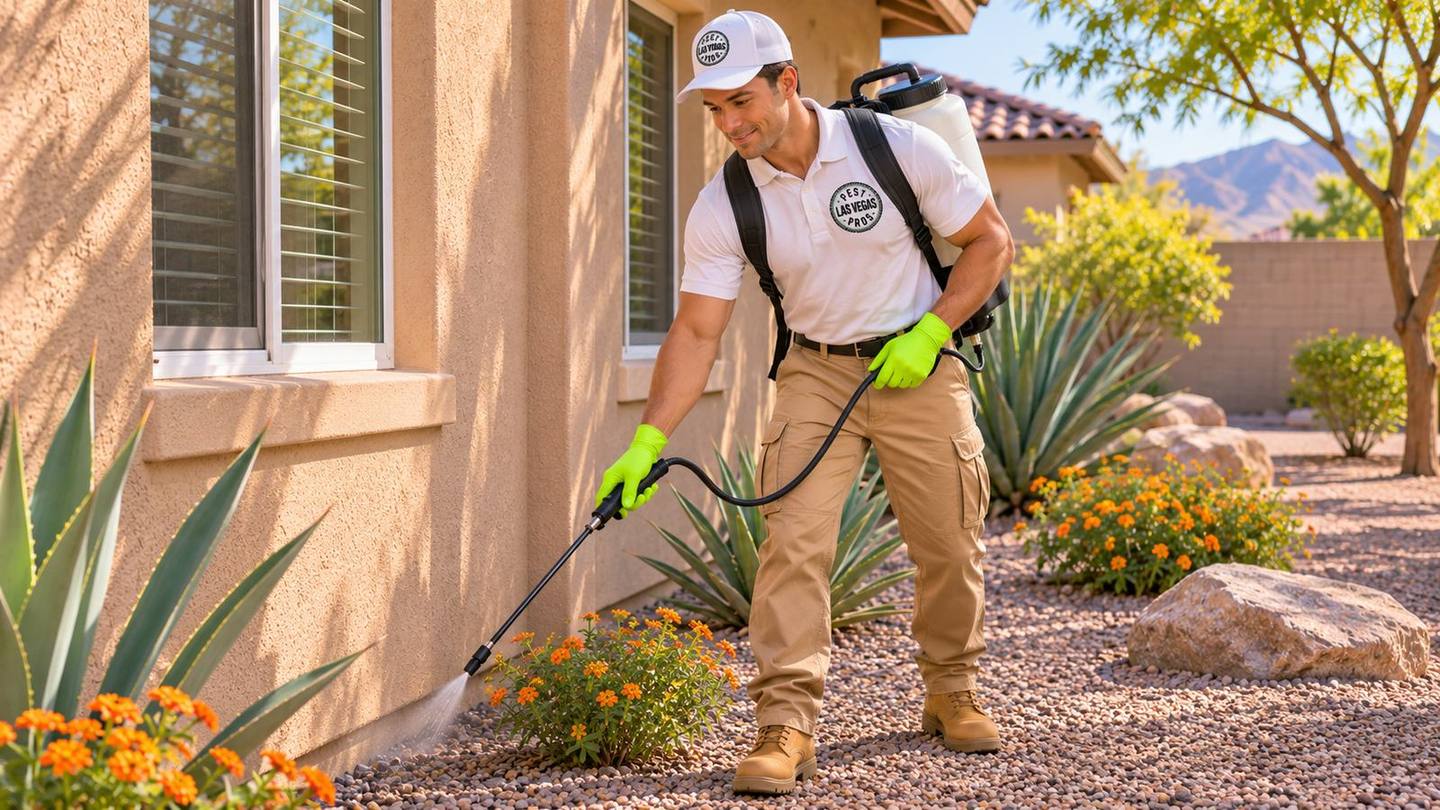
Earwigs come from damp landscaping, so we treat the exterior source. Earwigs are one of more than 100 common pests covered by general service, and every general service visit treats the full property, inside and out. Outside, we focus on where earwigs live and travel: the damp beds and planters along the foundation, around irrigation, along the base of block walls and around doors, garage doors and patio sliders where they get in. Licensed technicians apply every product exactly as its label directs.
We will also show you the openings worth closing: gaps under doors, torn screens and cracks. We recommend the fix; we do not do it. Pest Pros does not seal, patch or repair homes. Fixing the irrigation and moving the mulch is the homeowner's side of the job, and it makes our treatment last longer. Here is what general service covers.
The first visit is $120. There is no obligation to continue. Customers who continue pay $80 every 60 days, the schedule we recommend for the desert. A customer who asks for monthly service can have it at $50 a month. If you only want one visit, a one-time service is $120 with a 60-day warranty. Our warranty in plain words: if pests return between visits, we return too, at no charge. There is no contract and no cancellation fee. Once the home is under control, most customers choose exterior service and have the inside treated once or twice a year. Every price is also on our pricing page.
Seeing other moisture pests along with the earwigs? They usually share the same damp spots. Read about centipedes and millipedes and silverfish in bathrooms and boxes.
Common questions
Are earwigs dangerous to my family or pets?
Why do I only see them after the sprinklers run?
Will earwigs infest my house?
Is earwig treatment extra?
Do I have to sign up for monthly service?
Sources: UC IPM Pest Notes: Earwigs. Facts are summarized in our own words. Prices, service and warranty come only from Pest Pros.