
Why are there so many crickets after a summer storm?
Las Vegas pests follow heat and water, and crickets are one of the clearest examples. Through the hottest weeks, summer heat drives crickets toward cool, damp places, often right up against the house or inside it. Then the late-summer monsoon storms arrive, the ground softens, and the valley sees a spike in crickets, along with the ants and the scorpions that follow them. For a few weeks it can feel like they came out of nowhere.
They did not. Crickets lay their eggs in soil, and they spend the day hidden in moist, sheltered spots: under rock mulch and landscape fabric, in irrigated beds, under woodpiles and stored items, and in weedy corners of the yard. They come out at night to feed. A storm that soaks the desert landscaping, plus the irrigation most yards run all summer, gives them exactly the damp cover they look for, and the numbers build fast.
Most people notice crickets first by sound. The chirping comes from adult males rubbing their wings together to attract females. A single cricket in a garage or behind a water heater can keep a household awake, and finding it is harder than it sounds because crickets stay hidden until dark.
Which cricket am I looking at?
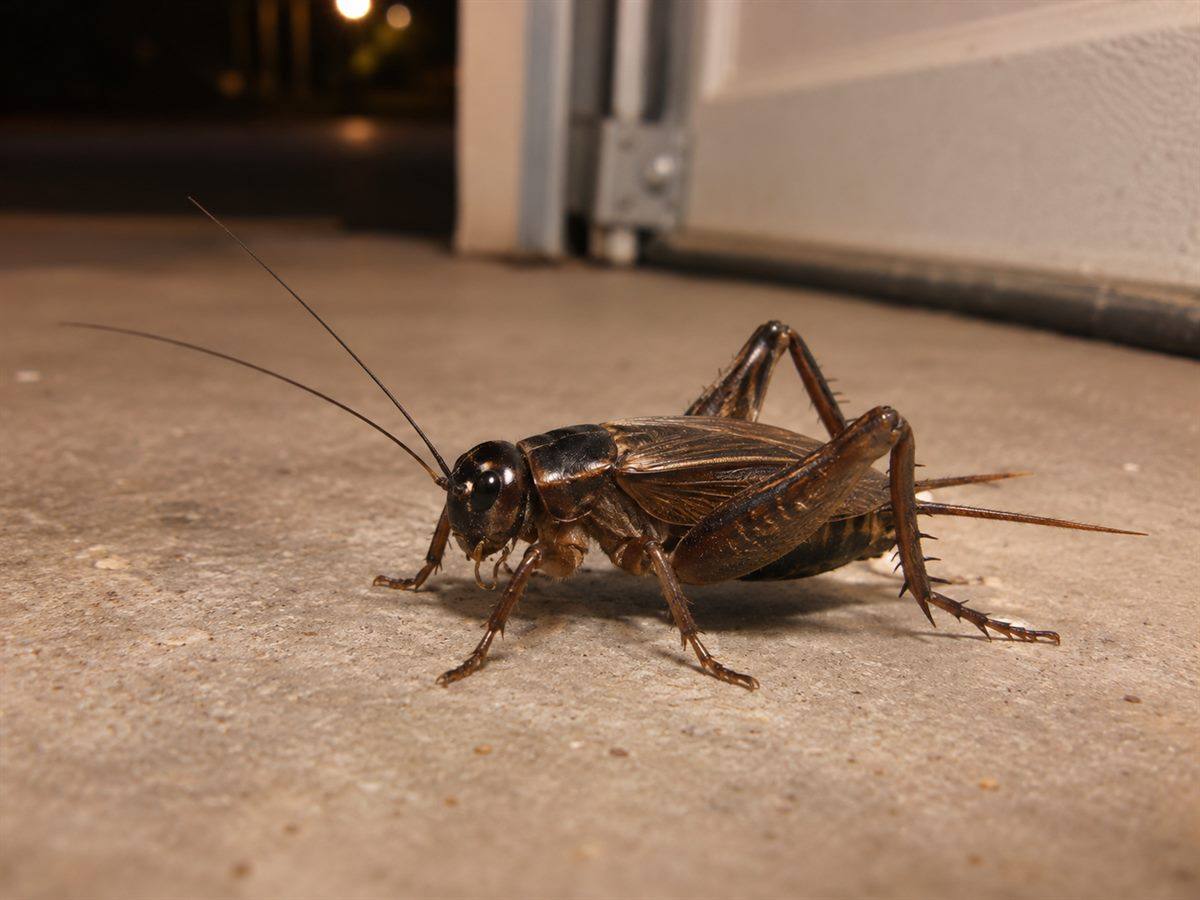
Two crickets cause most of the calls in the desert Southwest, according to University of Arizona Cooperative Extension:
- Field cricket: the big dark one, slightly over an inch long, dark brown to shiny black. Field crickets live and breed outdoors. They wander inside, especially in late summer, but they do not produce young indoors. The ones you find in the house or garage are visitors from the yard.
- Indian house cricket: smaller, about 3/4 inch, light yellowish brown or tan with darker bands. These gather around foundations and doors and come in through cracks. Unlike field crickets, they can live and breed indoors, which is why a steady trickle of tan crickets inside deserves a closer look.
Not sure which you have? Text us a photo. Size and color usually settle it, and where you found them tells us where to look.
Why do they pile up at the garage door and the walls?
Two things pull crickets to the same spots around a Las Vegas home: light and shelter.
- Lights: insects are drawn to lights at night, and crickets are no exception. A porch light, garage coach lights or a bright security light becomes a gathering point after dark, and the crickets that come to it end up along the wall and the door below it.
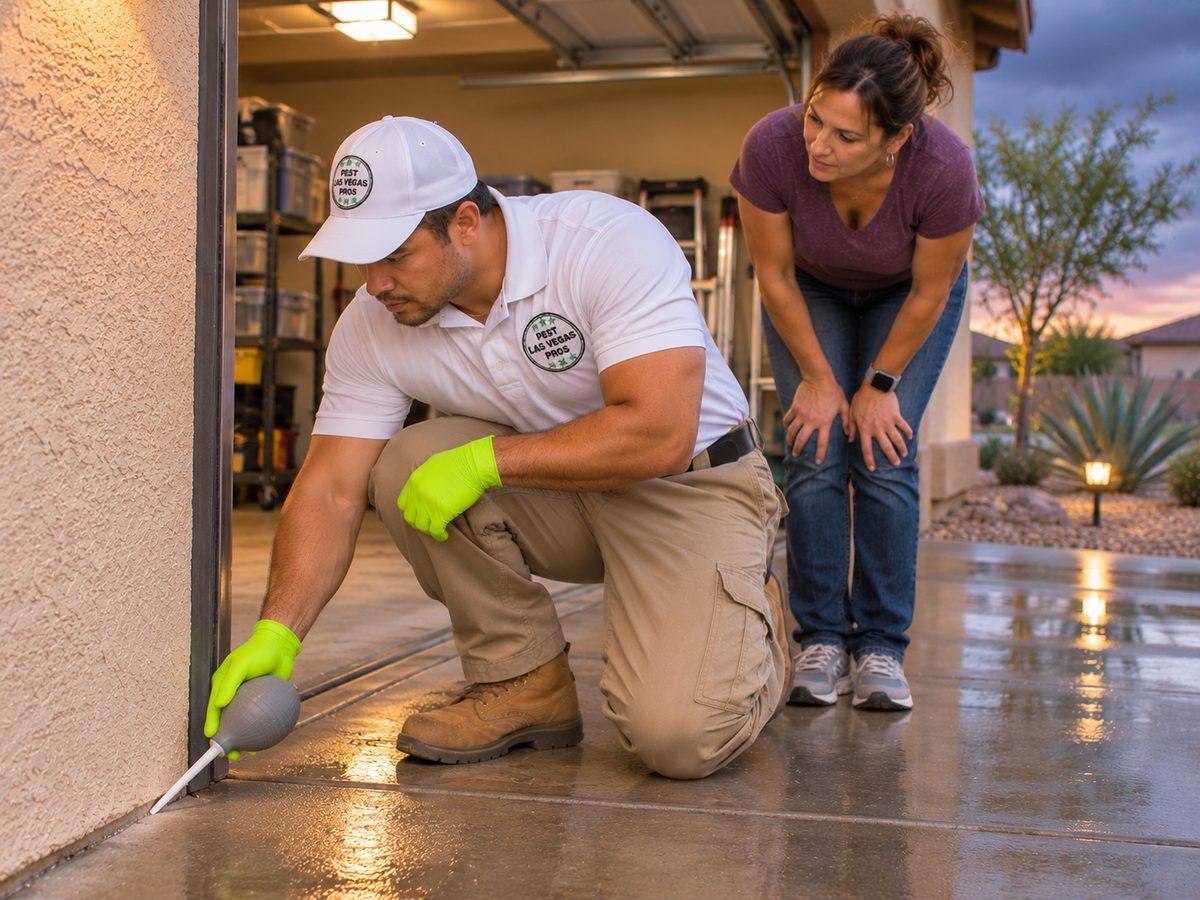
- The garage door: the gap under and beside a garage door is the easiest way in. A worn bottom seal, a door that does not close evenly, or a door left open on a warm evening lets crickets walk right in. Once inside, they tuck behind boxes, under shelves and around the water heater.
- Weep holes and the base of the stucco: many homes here have weep holes and a metal strip (often called a J-rail or weep screed) where the stucco meets the foundation. These small openings and edges give crickets cool cover right at the base of the house, next to the doors.
- Damp ground: irrigation that keeps the soil against the foundation wet, drippy hose bibs and puddles from the storm all hold crickets close to the walls.
Field crickets that wander indoors do not breed there, and many end up as the dead crickets you sweep out of the garage and laundry room. That cleanup is a sign of how much activity is going on just outside.
If they do not bite, why do crickets matter?
Crickets do not bite and do not spread disease, according to University of Arizona Extension. In large numbers they can chew fabrics, carpet and young garden plants, and the noise alone is reason enough for most people to call. But the bigger reason is what eats them.
Crickets are a major food source for scorpions and spiders. Reducing crickets helps reduce the pests that hunt them. In Las Vegas that means bark scorpions, black widows and other spiders that set up along the same walls, doors and garage edges where the crickets gather. A summer with crickets piling up at the door is often a summer with more scorpions in the garage. That is why we treat cricket reduction as scorpion reduction. Our guide on keeping scorpions out covers the scorpion side of the same problem.
What helps at home?
Extension guidance is clear that no single step solves crickets. A few changes together make a real difference, and most of them also cut down on scorpions:
- Change the lighting: turn off outdoor lights you do not need at night, or switch fixtures near doors to yellow "bug" bulbs, which draw fewer insects. If you need a security light, aim it at the yard rather than mounting it right over the door.
- Seal the garage door: check the bottom seal and the side seals. If you can see daylight under or beside the door, crickets can get in. Keep the garage door closed in the evening.
- Door sweeps and weatherstripping: fit sweeps and weatherstripping on every door to the outside, including the door from the garage into the house.
- Caulk small gaps: around pipes, wires and the base of the walls where you can see openings.
- Fix the water: repair leaking irrigation lines and emitters, point emitters at plants rather than the wall, and do not let water stand after a storm.
- Clear the edges: move woodpiles, stored items, weeds and plant debris away from the walls so crickets have less cover next to the house.
- Inside: put pet food away at night, keep the garage floor clear, and vacuum up crickets you find.
We recommend these fixes on every visit and show you the openings worth closing. We do not do the repairs ourselves: Pest Pros does not seal, patch or repair homes, and never charges for it. For bigger work, a handyman is the right call.
How Pest Pros does it
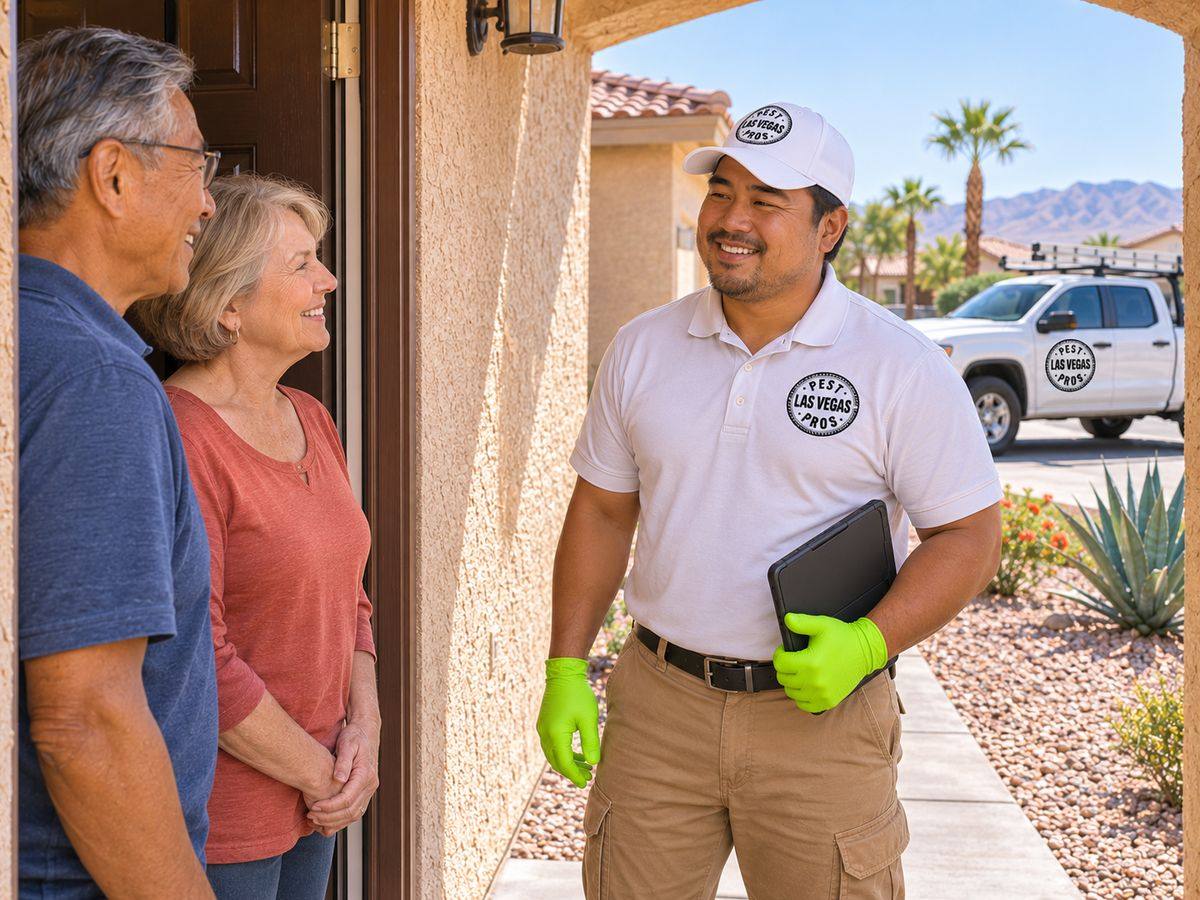
Most companies charge extra the moment you say mosquitoes, fleas, ticks or crickets. We don't. It's all part of your general service. Our technicians target whatever you're seeing, at full strength, while it's active, at the same price. No add-ons, no upsell.
Every general service visit treats the full property, inside and out. Crickets are covered by general service, and the technician targets the areas where they hide and enter, next to the doors and garage. Licensed technicians apply every product exactly as its label directs.
The first visit is $120, with no obligation to continue. Customers who continue pay $80 every 60 days, the schedule we recommend. A customer who asks for monthly service can have it at $50 a month. If anything keeps coming back between visits, tell us and we come back at no charge. If you only want help through one bad stretch, a one-time service is $120 and carries a 60-day warranty. There is no contract and no cancellation fee. Every price is on our pricing page, and the general pest control page explains what each visit covers.
Common questions
Do you charge extra for crickets?
Why are crickets dying in my garage?
Will the crickets go away on their own?
Do crickets bite?
Do I have to sign up for monthly service?
Sources: University of Arizona Cooperative Extension: Backyard Gardener #205, Crickets · Utah State University Extension: Crickets · UC IPM Pest Management Guidelines: field crickets. Facts are summarized in our own words. Prices, service and warranty come only from Pest Pros.